
Fra: 25. november 2026 09:00
Til: 27. november 2026 16:00
Lokasjon: Oslo Science Park, Oslo, Norway
Kontaktpersoner

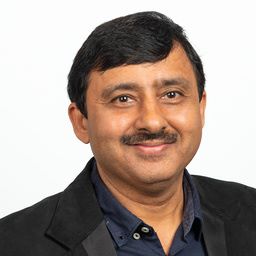
It is with great pleasure to welcome you to the Third International Conference on Digital Sovereignty (ICDS 2026), which will be organised by the Institute for Energy Technology (IFE) from November 25th – 27th, 2026, in Oslo, Norway.
The International Conference on Digital Sovereignty (ICDS) is the world’s only dedicated conference exclusively focused on digital sovereignty, addressing one of the most critical challenges shaping today’s digital future.
We are looking forward to welcoming you!
Sanjay Misra and Petter Kvalvik (General Chairs)
Conference program (TBA)
Detailed Program
The detailed program will be published soon and will be available for download. For any enquiries about the program, don’t hesitate to get in touch with us.
Keynote Speakers (TBA)
Call for Papers
We have five tracks in ICDS 2026. Papers in any of these areas, especially with the following keywords covering and related to Digital Sovereignty, are welcome to be submitted.
Keywords: Artificial Intelligence, Computational Intelligence, Human-Centric AI, Human-AI Teams, Sovereignty, Internet of Things, Sustainable Development Goals, Artificial Intelligence of Things, Sustainability, Big Data, Data Analytics, Machine Learning, Deep Learning, Intelligent Systems, Cloud Computing, Edge Computing, Blockchain, Digital Autonomy, Federated Systems, Cybersecurity, Digital Trust, Trustworthiness, Resilience
Keywords: Artificial Intelligence, Computational Intelligence, Human-Centric AI, Human-AI Teams, Sovereignty, Internet of Things, Sustainable Development Goals, Artificial Intelligence of Things, Sustainability, Big Data, Data Analytics, Machine Learning, Deep Learning, Inte
Track 1: Human-Centric Digital Sovereignty
- Digital Empowerment
- Privacy
- Data Altruism
- Incentives for Sharing Digital Assets
- Dynamic Consent
- Ethical Considerations
- Self-Sovereignty
- Co-Decision
- Transparency and Traceability
- Usage Rights
- Personal Data Spaces
- Human-Centric AI
- Human-AI Team Collaboration
Track 2: Industry and Innovation Impact
- Use of Human-Centric AI and DS in Industry
- AI for National Security and Digital Sovereignty
- Ensuring Cyber Resilience
- Digital Sovereignty in Business: Challenges and Strategies
- Legal Implications of Human-Centric AI and DS
- Policy Frameworks for Digital Sovereignty
- Improving Patient Care and Public Health with Human-Centric AI
- Use of AI and DS in Banking
- Impact of Artificial Intelligence in Industry
- Computational Intelligence Applications
Track 3: Digital Ecosystems and Governance
- Interoperability
- Portability
- Reference Architectures
- Digital Borders and Territories
- Data Spaces
- Cloud-to-Edge Continuum
- Decentralized Identities
- Enhancing Governance and Service Delivery through AI and DS
- Governance Models, Policies, Laws, Regulations, and Compliance
- Trust Anchors
- Business Models
- Data Valuation
- Smart Contracts
- Intelligent Systems Governance
- Decentralised Autonomous Organizations (DAOs)
Track 4: National Digital Sovereignty and Societal Impact
- National AI Capabilities
- National Security Considerations
- Economic Considerations
- Control Over and Autonomy in National Digital Assets
- Resilience and Risk-Based Approaches for Digital Sovereignty
- Technology Independence
- Strategies in a Multi-Polar World
- Addressing Societal Inequalities with Human-Centric AI and DS
- Environmental Sustainability
- AI Solutions for Climate Change and Resource Management
- Emerging Trends and Challenges in Human-Centric AI and DS
- Global Cooperation for Ethical AI and DS
Track 5: Geopolitics and Trust
- Digital Trust as a Geopolitical Asset
- Trust Frameworks for Cross-Border Data Flows
- Sovereign Digital Identities and International Trust Systems
- Trust Anchors, Data Intermediaries, and Dataspace Operators
- Platform Power and Algorithmic Influence in the Global Order
- Disinformation, Information Integrity, and Geopolitical Influence
- The Geopolitics of Global Digital Value Chains and Ecosystems
- Digital Sovereignty in a Fragmented and Multipolar World
- Cyber Diplomacy and Strategic Autonomy in the Digital Sphere
- Extraterritoriality and the Global Impact of National Digital Regulations
- Trusted Infrastructures and Resilience in Cross-Jurisdictional Systems
- Institutional Innovation for Global Trust and Governance
- Digital Non-Alignment and Sovereignty for Emerging Economies
- Environmental and Ethical Implications of Geopolitical Tech Rivalries
- Global Standards vs. Local Control: Trust in International AI and Data Systems
Submission
The ICDS 2025 conference is now in the process of soliciting submissions of original and innovative papers. Prospective authors are invited to submit papers in core and/or related areas of digital sovereignty. The detailed list of topics can be found in the ‘Call for Papers’. Each paper will be reviewed by three experts from the International Program Committee.
Authors must submit an original full paper, 10 pages for Springer Proceedings on Complexity , that has not been previously published. All contributions must be written in English. Submissions will be evaluated based on relevance to conference themes (digital sovereignty, cybersecurity, data governance), originality and novelty, technical quality and rigor, clarity and organization, impact and significance, and, where applicable, ethical and responsible research practices, especially in areas such as AI and data use.
Submissions should be made through Easychair.
Submission Guidelines
Submissions to ICDS 2026 will follow a rigorous and transparent review process to ensure high-quality contributions. After the submission deadline, all papers will be screened by the editors for relevance and baseline quality. Suitable submissions will then be peer-reviewed by at least three independent experts. The editors will carefully evaluate the reviews and make recommendations based on consensus and merit. Finally, accepted papers will be reviewed by the chairs’ Steering Committee and Honorary Chair for final confirmation. Our goal is to maintain fairness, academic integrity, and constructive feedback throughout the process.
Authors must submit an original full paper (6 -10 pages) that has not previously been published. All contributions must be written in English.
Authors should consult Elsevier Procedia authors’ guidelines, read all the instructions (including use and declaration of generative AI in writing, research data policy and copyright issues) very carefully and use their proceedings templates, either for LaTeX or for MSWord for the preparation of paper. The MS Word template can be downloaded from below.
Important Dates
| Paper Submission | August 31. 2026 |
| Author Notification | September 25. 2026 |
| Registration Due and Camera-Ready Deadline | October 15. 2026 |
| Conference | November 25. – 27. 2026 |
Venue
The Institute for Energy Technology (IFE), Norway will organise this year’s Forskningsparken (Oslo Science Park), Oslo, Norway.
Registration Fees
| Registration | Fee | |
| Early Bird Registration before 15th October 2026 | Ordniary Registration Rates | |
| Regular Author (29th – 31st Oct) | 525 € / 6200 NOK | 600 € / 7200 NOK |
| Additional Paper | 300 € / 3600 NOK | 300 € / 3600 NOK |
| Attendees: Public Sector, Industry and Businesses (29th – 31st Oct) | 350 € / 3500 NOK | 350 € / 4000 NOK |
| Attendees: Public Sector, Industry and Businesses | – | – |
*A 25% VAT will be applied to the registration fees. The registration fees include all coffee breaks and lunch on November 25th, 26th, and 27th as well as publication of the accepted paper.
Please register here.
Conference Committee
Honorary Chair
Bjørn Axel Gran, Institute for Energy Technology, Norway
Sokratis Katsikas, NTNU, Norway
General Chairs
Sanjay Misra, Institute for Energy Technology, Norway
Petter Kvalvik, Institute for Energy Technology, Norway
Industrial Loaison Chairs
Petter Kvalvik, Institute for Energy Technology, Norway
Per-Arne Jørgensen, Institute for Energy Technology, Norway
Finance Chair
Karianne Hauge Bjugan, Institute for Energy Technology, Norway
Registration Chair
Lars Nagelhus-Arnesen, Institute for Energy Technology, Norway
Steering Committee
Tomas Eric Nordlander, NILU, Norway
Vasileios Gkioulos, Norwegian University of Science and Technology, Norway
Aida Omerovic, USN, Norway
Kai Morgan Kjølerbakken, Institute for Energy Technology, Norway
International Advisory Committee
Ulrich Ahle (CEO, Gaia-X), Belgium
Boris Otto, Fraunhofer, Germany
Chandra Challangonda (CEO, FIWARE), Finland
Thomas Ploug, Alborg University, Denmark
Raj Buyya, University of Melbourne, Australia
Mohammad S. Obaidat, The University of Jordan, Amman, Jordan
Matthew Adigun, University of Zululand, South Africa
Haugen, Øystein, Østfold University College, Halden, Norway
Program Committee Chairs
Sanjay Misra, Institute for Energy Technology, Norway
Robertas Damaševičius, Silesian University of Technology, Poland
Rytis Maskeliunas, Kaunas University of Technology, Lithuania
Murat Koyuncu, Atilim University, Turkey
Lalit Garg, University of Malta, Malta
Local Chairs
Sabarathinam Chockalingam, Institute for Energy Technology, Norway
Sizarta Sarshar, Institute for Energy Technology, Norway
Mohsen Toorani, University of South-Eastern Norway, Norway
Nadia Saad Noori, University of Agder, Norway
Monica Kristiansen Holone, Østfold University College, Halden, Norway
International Conference Committee (updating)
Sanjay Misra, Institute for Energy Technology, Norway
Brij Gupta, Asia University, Taiwan
Giorgio Pedrazzi, University of Brescia, Italy
Manju Khari, JNU, India
Per-Arne Jørgensen, Institute for Energy Technology, Norway
Gokhan Sengul, Atilim University, Turkey
Sudeep Tanwar, Nirma University, India
Jan Erik Farbrot, Institute for Energy Technology, Norway
Clara Maathuis, Open University of the Netherlands, The Netherlands
Harald Thunem, Institute for Energy Technology, Norway
Ayan Chatterjee, NILU, Norway
Mario Hoffmann, Institute for Energy Technology, Norway
Daniel Rodríguez, University of Alcalá, Spain
Kai Morgan Kjølerbakken, Institute for Energy Technology, Norway
Michael N Louka, Institute for Energy Technology, Norway
Mohammad S. Obaidat, The University of Jordan, Amman, Jordan
Arne Roar Nygård, Norwegian University of Science and Technology, Norway
Jose María Alvarez Rodríguez, Carlos III University of Madrid, Spain
Pankaj Pandey, Norwegian University of Science and Technology, Norway
Chhagan Lal, Norwegian University of Science and Technology, Norway
Vasileios Gkioulos, Norwegian University of Science and Technology, Norway
Susanne Koch Stigberg, Østfold University College, Halden, Norway
Broderick Crawford, Pontificia Universidad Catolica De Valparaiso, PUCV, Chile
Ricardo Soto, Pontificia Universidad Catolica De Valparaiso, PUCV, Chile
Luis Fernandez Sanz, Universidad de Alcala, Spain
Dilip Singh Sisodia, National Institute of Technology, Raipur, India
Lov Kumar, National Institute of Technology, NIT Kurukshetra, India
Georgios Lampropoulos, International Hellenic University, Greece
Kerstin Siakas, University of Vasa, Finaland
Mohsen Toorani, University of South-Eastern Norway, Norway
Nadia Saad Noori, University of Agder, Norway
Aida Omerovic, SINTEF, Norway
Ricardo Colomo-Palacios, Universidad Politecnica de Madrid, Spain
Vegard Kolbjørnsrud, BI Norwegian Business School, Norway
Ricardo Soto, Pontificia Universidad Catolica De Valparaiso,Chile
Seifedine Kadry, Noroff University College, Norway
Ibrahim AHameed, NTNU, Norway
Juan A. Gómez-Pulido, Universidad de Extremadura, Spain
Elinda Kajo Mece, Polytechnic University of Tirana. Albania
Rytis Maskeliunas, Kaunas University of Technology
Murat Koyuncu, Atilim University
Terje Bodal, Institute for Energy Technology, Norway
Ibrahim A. Hameed, Norwegian University of Science and Technology
Sabarathinam Chockalingam, Institute for Energy Technology, Norway
Ankur Shukla, Institute for Energy Technology, Norway
Bharti Suri, GGS Indraprastha University, India
Hans Olav Randem, Institute for Energy Technology, Norway
Manju Kaushik, Amity University, Rajasthan, India
Pham Quoc Trung, HCMC University of Technology, HCMC, Vietnam
Rania Elgazzar, University of Agder, Norway
Sambeet Mishra, University of South-Eastern Norway, Norway
Contact Information
Conference General Chairs: Sanjay Misra (sanjay.misra@ife.no),Petter Kvalvik (Petter.Kvalvik@ife.no)