In CIRCMAN5.0, the partners contribute to standardization activities in many fields, while fostering the adoption of circular and sustainable manufacturing practices. The standardization work in the project is divided into 3 steps:
- Screen and evaluate the standardization landscape, in order to, e.g., avoid duplication of work
- Promote relevant and existing standards for use in the project
- Contribute to the update of existing standards and the creation of new standards
The CIRCMAN5.0 project is currently at step 2, with more than 1 year left of project duration.
The pathway to standardization impact for CIRCMAN5.0 is clear: To first identify the standards where we can make a clear and concise contribution to new content. Each standard is maintained and updated by a standardization body or committee, which meets regularly and collects suggested updates for the standard between revisions. The standards are typically revised and updated every 2-5 years, or when there is a clear need for update. If relevant, the committees also suggest new standards which fill a gap in the current landscape, where international agreement is critical for efficient and clear communication.
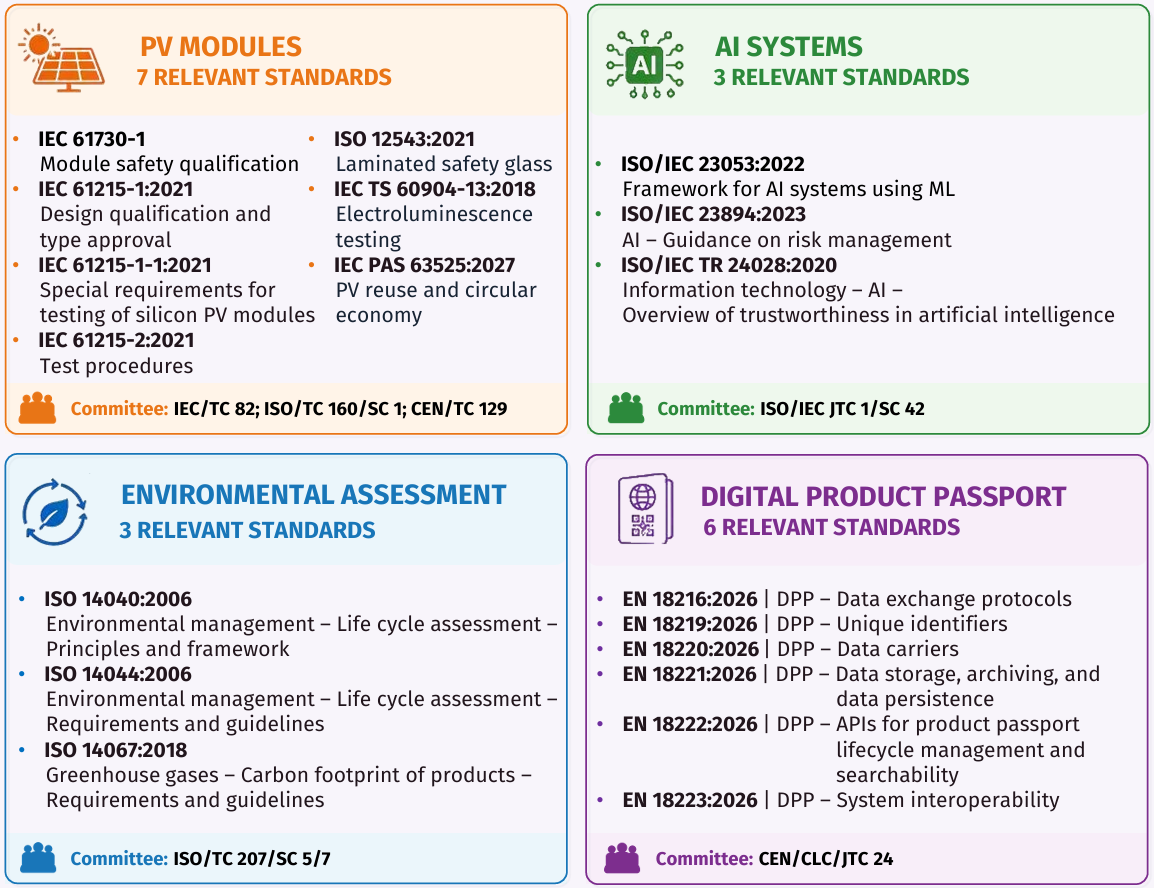
The critical standards in CIRCMAN5.0 are related to multiple fields in photovoltaics and sustainable manufacturing. We have at this point identified more than 60 standards that are relevant for the activities in CIRCMAN5.0. They are mainly within the topics of PV module quality, data sharing infrastructure, digital product passport development, AI management systems, and environmental and end-of-life PV management.
In our work to impact the standards and make sure they have the best updated content, taking the CIRCMAN5.0 results and experiences into account, we have found 19 standards that we perceive as more relevant. We are certain that by the end of the project, CIRCMAN5.0 will be able to obtain experience for the update of several of the mentioned standards in their next round of revision.
One of the most exciting tools in CIRCMAN5.0 for direct impact on standards is the AI-based defect detection tool. This tool is a fully embedded and integrated internet-of-things computing system designed specifically for real-time inspection of silicon PV modules during production. The system incorporates electroluminescence cameras and highly optimized deep learning models to perform online, automatic detection for various defect types directly on the assembly pilot line. The detected output will be integrated with the decision support system to support responsive, data-driven decision-making during manufacturing at the included pilot sites.
The AI-based defect detection tool can impact existing standards by validating industrial data from multiple PV manufacturing lines and providing feedback on how automated machine learning and AI analysis could be incorporated in future standards for EL-based crack assessment in PV modules. The AI-detection tool is especially relevant for the following standards: IEC TS 60904, IEC 61730, and IEC 61215, all of which deal with the quality of PV modules after manufacturing.
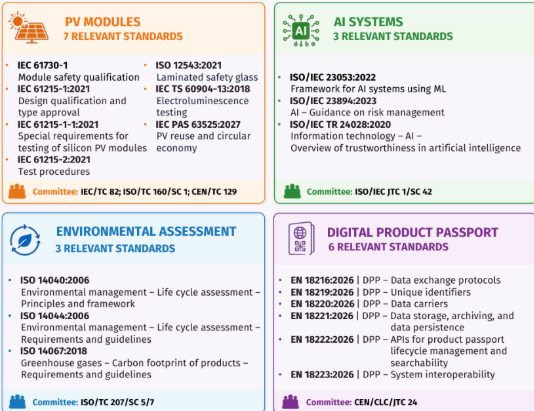
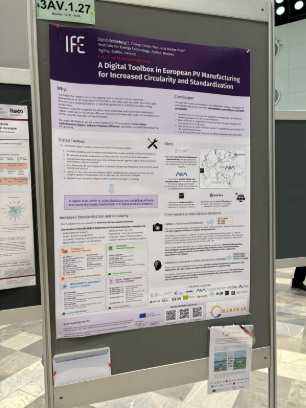
The work towards standardization in CIRCMAN5.0 was presented at the 43rd European Photovoltaic Solar Energy Conference and Exhibition, more popularly known as EUPVSEC, in Rotterdam, Netherlands, between the 14th and 18th of September, 2026. A poster contribution titled “A Digital Toolbox in European PV Manufacturing for Increased Circularity and Standardization” was presented by IFE in session 3AV.1, and the poster can be seen below, including an overview of the relevant standards in four different technology domains.
Related news
-

15. October 2026
CIRCMAN5.0 at EUPVSEC 2026
The 43rd European Photovoltaic Solar Energy Conference and Exhibition, or EU PVSEC, was…
-

16. June 2026
IFE supports nuclear education facility at Lancaster University
IFE provides technologies and services to support a new educational facility at Lancaster…